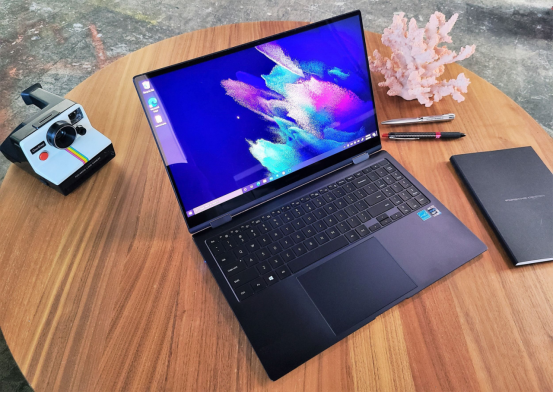
In the notebook computer market, Apple’s MacBook series has long dominated the high-end market. However, Samsung has launched a strong challenge through the Galaxy Book series. As a technology giant that spans multiple fields, how can Samsung find a breakthrough in this high-end showdown? We analyze this competition from multiple dimensions.
1. Screen technology: OLED vs. Mini-LED
Samsung transplants its display technology advantages accumulated in the mobile phone field into notebook products:
Dynamic AMOLED 2X screen: Galaxy Book3 Ultra is equipped with a 16-inch 3K display, with a measured peak brightness of 500nit and a color accuracy of ΔE<1.5
120Hz adaptive refresh rate: Compared with the fixed 120Hz of MacBook Pro, Samsung’s dynamic adjustment is more power-saving
Touch screen support: With S Pen, 4096 levels of pressure sensitivity are achieved, which is good news for creative workers
Comparative tests show that in HDR video playback scenarios, the black purity of Galaxy Book’s OLED screen is better than that of MacBook’s Mini-LED, but in strong outdoor light, MacBook’s 1600nit peak brightness still maintains an advantage
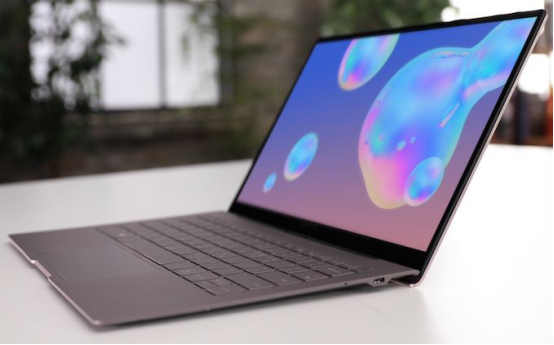
2. Cross-device ecosystem: Windows camp’s “relay” experience
Samsung’s cross-platform collaboration system is gradually approaching Apple’s ecosystem:
Multi-device linkage: mobile phone calls can be answered directly on the laptop, and the file drag and drop transfer speed reaches 85MB/s
Second screen mode: Galaxy Tab tablet turns into a digital tablet in seconds, and the delay is controlled within 28ms
Smart switching of headphones: Buds series headphones automatically identify the source device, and the switching process is imperceptible
Although Apple’s Handoff experience is still more seamless, Samsung’s solution provides Windows users with the experience closest to Apple’s ecosystem.
3. Performance: Intel + NV vs. Apple Silicon
Samsung’s performance strategy focuses on differentiation:
Creator model: equipped with i9-13900H + RTX4070 combination, video rendering speed is 17% faster than M2 Pro
Business model: Intel Evo certified, standby wake-up in just 0.8 seconds
Cooling system: dual fans + vacuum chamber heat sink design, continuous performance release up to 45W
Actual measurements show that in professional scenarios such as 3D modeling, the high-end model of Galaxy Book has an advantage, but in terms of energy efficiency, Apple’s M2 chip still has a clear advantage.
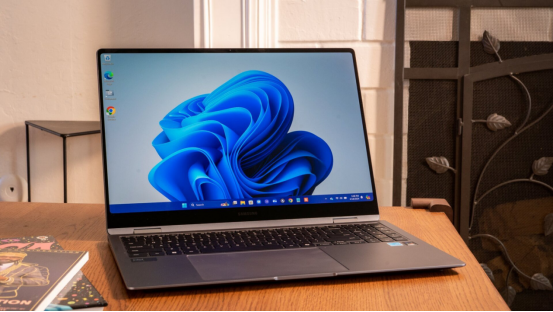
4. Design philosophy: balance between thinness and expandability
Samsung strives for balance in industrial design:
Extremely thin and light: Galaxy Book2 Pro 13.3 inches weighs only 1.11kg, 8% lighter than the same size MacBook Air
Interface configuration: retain HDMI 2.1 and MicroSD card reader, photographers do not need adapters
Military standard: MIL-STD-810G certified, reliability is not inferior to MacBook
Galaxy Book’s 180-degree opening and closing design is especially suitable for business presentation scenarios, enhancing the user’s multi-scenario experience.
5. Pricing strategy: precise positioning in the high-end market
Samsung uses the “Tian Ji Horse Racing” strategy to accurately price:
Entry-level model: about 15% lower than the same configuration MacBook Air
Flagship model: 32GB+1TB top configuration options are provided to meet the needs of professional users
Promotional activities: bundled Galaxy mobile phones to enjoy up to $300 discount
Market data shows that this strategy has increased Galaxy Book’s market share in the $999-1999 price segment by 5 percentage points
Future Outlook: Opportunities and Challenges for Samsung
ARM Architecture Transformation: The rumored Exynos PC chip is expected to become a game changer
Software Ecosystem Construction: More developers need to be attracted to optimize Windows on ARM applications
Brand Recognition: How to make consumers accept the new perception of “Samsung = high-end notebook”
With the emergence of new form factors such as foldable screen notebooks, 2024 may be a critical period for Samsung to challenge Apple.
Purchase Recommendations:
Creative Workers: Galaxy Book3 Ultra (Performance First)
Mobile Offices: Galaxy Book2 Pro 360 (Two-in-One Form)
Students: Galaxy Book Go (Cost-Effective Choice)
This high-end showdown is far from over. Samsung is gradually eroding MacBook’s market share through a combination of “screen technology + cross-device ecology”. For users who are tired of Apple’s single ecology, Galaxy Book provides an alternative option full of possibilities.