In today’s world where smartphones are becoming more and more similar, Samsung has boldly tried to redefine the form of mobile phones. From the rotating screen in the 2000s to the retractable screen prototype in 2020, the Korean giant has at least “opened its mind” dozens of times – some have become classics, and some have failed miserably.
This article lists the 5 most radical experimental phones in Samsung’s history. They may have poor sales, but they paved the way for today’s folding screens.
1. 2006 | Samsung SPH-B5200: a “roll-up phone” that can stretch
What’s crazy
The world’s first sliding cover + rotating screen phone: after pushing the keyboard horizontally, the screen can be rotated 90 degrees to a vertical screen.
Military-grade three-proof design: can withstand a 1.5-meter drop (iPhone was not yet born at that time).
Why did it fail?
The thickness is 18mm (twice that of Nokia in the same period).
The failure rate of the rotating mechanism is as high as 30%, and it is called a “joint killer” by users.
Legacy:
Accumulated experience for the hinge technology of the 2019 Galaxy Fold.
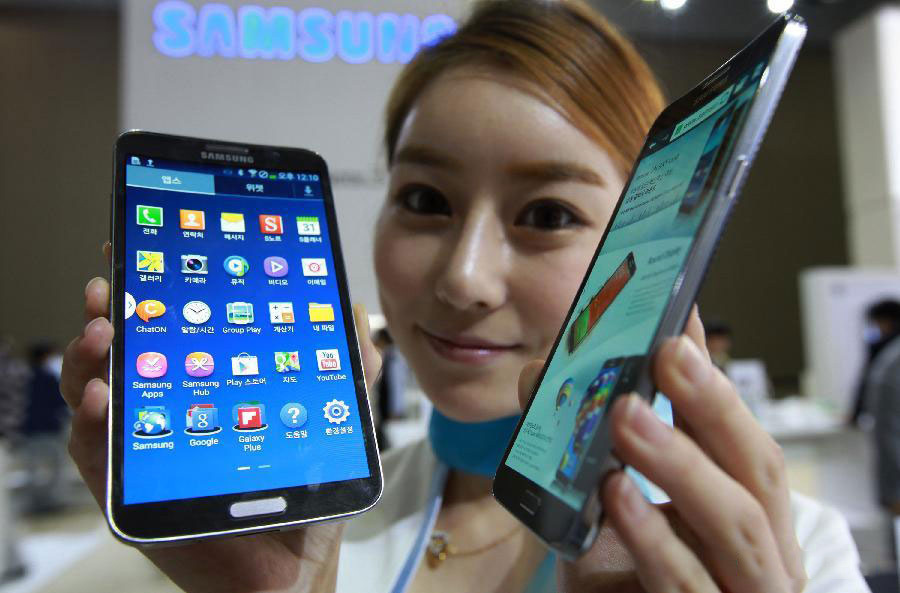
2. 2013 | Samsung Galaxy Round: The curved “banana phone”
What’s crazy
The world’s first curved screen phone: The OLED screen is curved vertically to fit the curvature of the face.
“Scrolling notifications”: Information will roll down the curved surface like marbles.
Why did it fail?
Zero practicality: The curved screen caused the false touch rate to soar.
Only sold in South Korea, with sales of less than 50,000 units.
Legacy:
Given the practical curved screen of the Galaxy S6 Edge.
3. 2017 | Samsung Galaxy X: Folding screen prototype (never launched)
What’s crazy
OLED screen that can fold inwards (2 years earlier than the mass-produced version of the Fold in 2019).
Hinge tested 200,000 folds (the final Fold only achieved 100,000 times).
Why canceled?
The screen has obvious creases and the yield rate is only 17%
Worried about repeating the Note 7 “explosion gate” PR disaster.
Legacy:
Its design evolved directly into the Galaxy Fold series.
4. 2020 | Samsung Galaxy Z Flip: Resurrection of the Cyberpunk of Flip Phones
What’s crazy
Vertical folding: When closed, it is only the size of a powder box.
Selfie external screen: When taking selfies with the rear camera, the external screen can be previewed (later copied by major manufacturers).
Controversial
The hinge has a serious dust problem, and the first batch of users complained collectively.
Priced at $1,380, but the performance is only equivalent to that of a mid-range phone.
Legacy:
It proves that there is a market for vertical folding, giving birth to competing products such as Moto Razr 5G.
5. 2021 | Samsung’s telescopic screen prototype: The screen can be stretched by 20%
What’s crazy
The screen can be stretched horizontally (from 6.7 inches to 8 inches).
It uses a magnetic sliding structure with no visible creases.
Why shelved?
After stretching, the thickness increases by 50%, like a “sandwich”.
Samsung’s internal assessment: “Users prefer folding rather than stretching”.
Legacy:
The technology may be used in future scroll screen devices.
Why does Samsung insist on “crazy experiments”?
Technical reserves: The patents accumulated from the failed original machine allowed Samsung to lead Apple in the folding screen field by 3 years.
Marketing memory point: Even if users do not buy it, they will remember the image of “Samsung is the most innovative”.
The cost of trial and error is controllable: Most experimental machines are only mass-produced on a small scale and can afford to lose money.
Conclusion: Where is the boundary of mobile phone form?
From flip to folding, to the future scroll screen and holographic projection – Samsung uses these crazy experiments to tell us:
The future of mobile phones has never been limited to a piece of glass straight board.