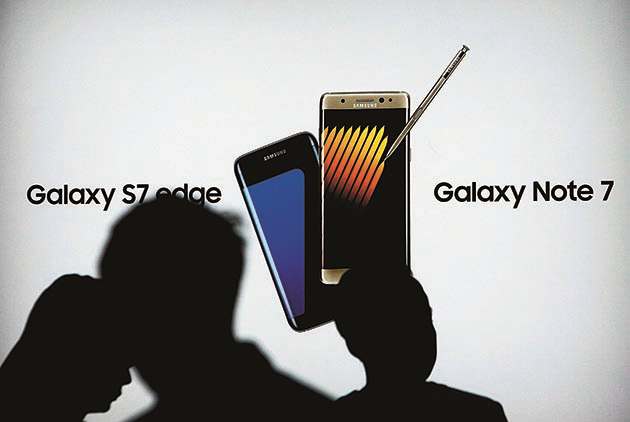
In 2016, the “explosion gate” of Samsung Galaxy Note 7 almost became one of the most embarrassing public relations disasters in the history of technology. Airlines banned carrying, consumers panicked and returned products, and it was even nicknamed “hand-held grenade” by netizens. This incident caused Samsung billions of dollars in economic losses, and more seriously, it shook consumers’ trust in the quality of Samsung products.
However, Samsung did not choose to escape, but took unprecedented measures to rebuild consumer trust: “8-Point Battery Safety Check”. This strict testing standard not only helped Samsung regain its footing, but also made its battery safety an industry benchmark.
1. From disaster to turning point
The root cause of the Note 7 explosion was a battery design defect, mainly reflected in the fact that the battery isolation layer was too thin, resulting in a short circuit or even a fire. After the incident, Samsung set up an independent investigation team and hired third-party experts to fully investigate the problem. The final conclusion was: “Battery safety cannot be compromised, and a new safety specification that exceeds industry standards must be established.”
2. What is the “8-point battery safety check”?
Samsung’s “8-point battery safety test” is a rigorous battery testing system that covers the entire life cycle of the battery from design to use. The specific contents include:
Durability test: simulates the performance of the battery at extreme temperatures (-40°C to 85°C).
Puncture test: directly pierce the battery with a metal needle to ensure that the battery will not explode instantly.
Overcharge protection: even if the battery is charged to 150% of the power, the system will automatically cut off the power to prevent overcharging.
X-ray scanning: Each battery is X-rayed before leaving the factory to eliminate any internal defects.
Charge and discharge cycle test: simulates the attenuation of the battery under long-term use.
Stress test: applies a current far exceeding normal use to ensure that the battery can operate stably.
Drop test: simulates the battery falling from different heights and angles to ensure that the battery will not cause danger due to physical damage.
Software monitoring: real-time monitoring of the battery’s health through AI algorithms, and automatically adjusts the charging speed to extend the battery life when abnormalities are found.
3. Is this set of standards really useful?
Samsung’s “8-point battery safety test” has proven to be very effective. Since the Note 7 incident, Samsung’s subsequent flagship products (including the Galaxy S8 and its subsequent models) have not had large-scale battery safety accidents, and the battery safety performance has been widely recognized by the industry. Competitors have also begun to learn from some of Samsung’s testing methods.
More importantly, Samsung chose to make these testing standards public and showed a video of the battery puncture test at the launch of the Galaxy S23 series, proactively showing consumers its determination to improve. This transparency is a leading practice in the industry.
4. Inspiration for other brands
The Samsung case shows that how a brand responds when facing a major crisis determines its future fate:
Thoroughly investigate the root cause of the problem: Samsung did not simply recall the product, but conducted a thorough investigation to ensure that the problem was resolved.
Establish safety standards that exceed the industry: Samsung did not settle for the minimum compliance requirements, but set higher safety standards.
Actively show improvements: Samsung used transparent practices to prove to consumers that it had made improvements instead of covering up problems.
Samsung not only successfully restored its brand reputation, but also made “battery safety” its new core selling point and won the trust of consumers.
Conclusion: Once trust is lost, it is harder to win it back than to rebuild it
The Note 7 incident made Samsung realize that consumers can forgive mistakes, but will never tolerate perfunctory behavior. After difficult reflection and improvement, Samsung rebuilt the public’s trust through the “8-point battery test”. Today, when users see this logo, they know that it is not only a guarantee of battery safety, but also a reflection of Samsung’s brand reputation.
For other technology companies, Samsung’s experience also provides an important lesson: whether the product can withstand this “self-torture test” is the key to whether the brand can gain a lasting foothold in the market.