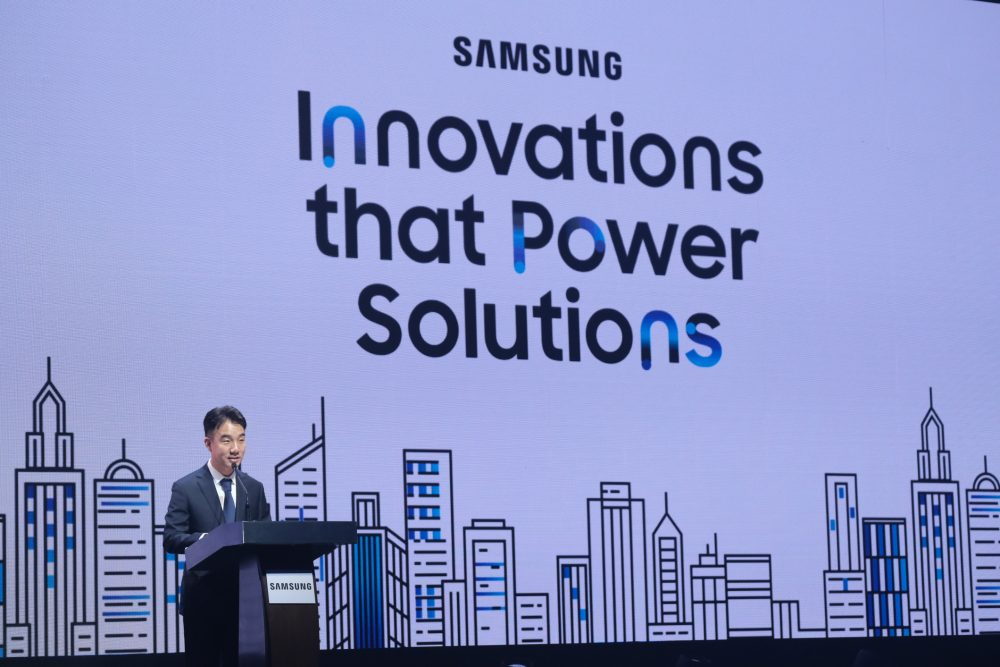
In today’s fiercely competitive technology industry, Samsung Electronics’ journey from a local Korean company to a global technology giant is a business legend. Founded in 1938, the company has now grown into a business empire spanning semiconductors, consumer electronics, biopharmaceuticals and other fields. Let’s take a closer look at Samsung’s unique success code.
Innovation gene: the core engine driving development
Samsung invests 7-8% of its revenue in research and development each year, a figure higher than many of its peers. In Suwon Digital City, south of Seoul, Samsung has one of the world’s largest private R&D centers, with more than 60,000 R&D personnel. This dedication to innovation has led to a number of industry breakthroughs:
Galaxy Round, the world’s first curved OLED screen phone (released in 2013)
Galaxy Z series that pioneered a new era of foldable screen phones (launched in 2019)
Revolutionary breakthrough in quantum dot display technology (widely used in QLED TVs)
Vertical integration of the industry chain
Samsung’s unique “self-sufficiency” model has built a strong competitive barrier:
The semiconductor department provides Exynos chips for mobile devices
The display panel department supplies top-level AMOLED screens
The memory chip business maintains the first place in the global market share
This vertical integration has enabled Samsung to maintain a stable supply during the epidemic, and the profit of the semiconductor business increased by 53% year-on-year in 2021.
Localization of globalization strategy
Samsung’s internationalization path is textbook-level:
North American market: quickly opening up the situation through operator cooperation
Indian market: establishing the world’s largest mobile phone factory and becoming one of the leaders in the Indian smartphone market
Middle East market: launching special edition models that conform to local customs
According to the 2023 financial report, Samsung’s share of the Latin American smartphone market reached 42.3%, and its share of the European market was 34%.
Brand building
Samsung’s brand marketing strategy is unique:
Sports marketing: Top sponsor of consecutive Olympic Games
Entertainment marketing: In-depth cooperation with Marvel and other IPs
Experience marketing: 2000+ Samsung experience stores around the world
This multi-dimensional brand building makes its brand value close to US$100 billion in 2023, ranking among the top five in the world.
Ability to respond to crises
Samsung has demonstrated amazing transformation capabilities many times:
Decisive layoffs and reorganization during the Asian financial crisis in 1997
Established the most stringent quality control system in history after the Note7 incident in 2016
Quickly turned to remote office solutions under the epidemic in 2020, promoting the digital transformation of work models
These crisis responses have earned it the reputation of “Phoenix in the technology industry”.
Strategic layout for the future
Samsung is continuously making efforts in multiple frontier fields:
5G communication: has mastered the world’s most standard essential patents
Artificial intelligence: Bixby voice assistant covers 80+ countries, gradually expanding AI application scenarios
Automotive electronics: Provide high-end vehicle chips for Tesla and others to help the development of intelligent driving
Business revelation
Samsung’s success brings three important inspirations to Chinese companies:
Long-term technology investment view
Balance between global thinking and local execution
The courage to actively seek change in crisis
In this era of accelerated change, Samsung’s story proves that only by engraving innovation into genes can we be invincible in the wave of science and technology. Its development process is not only a history of corporate growth, but also a living business strategy textbook.